
< Travel Guides

The Eleonora’s falcons of Essaouira

By Rod Tether
In 2017, journalist and nature writer, SIMON BARNES travelled with us to Morocco for a piece in the Times:
“More swift-like than the swifts, more falconine than any falcon I had ever seen and you know, there’s something very pleasing about birdwatching with a beer beside you. Not least because getting the beer was a challenge in itself: the architectural eccentricities of the Villa Maroc in Essaouira meant that it was hard to find the bar and having found it, harder still to find the roof terrace again.
But once up there I could drink a beer with my old friend Rod Tether, with whom I have shared some fine adventures and some excellent birds in Zambia, some of them while canoeing from hippo to hippo. From the roof we could observe a sky made dark by the pallid swifts, and every now and then among them, there was a bird still longer and slimmer of wing—and this was Eleonora’s falcon. Rod got it first: the bird we had come to look for, no less. I lowered my gaze from the sky and looked out to sea: a low, rugged, lightly sinister island with the appropriately sinister name of Mogador. Home of the falcons.
Every now and then you come across an animal that seems to have reinvented the principles that most of its kind live by. The aardvark is one example, another is the giant panda. Eleonora’s falcon has invented a new and strange way of being a falcon.
They save their nesting until the late summer and early autumn. And they do so in colonies: up to a thousand on Mogador, others across the Mediterranean. And always these colonies are on the migration routes: the great flyways that lie between Europe and Africa.”
and the experience has lived long in the memory with this beautiful description featuring in the just-published HOW TO FLY – Taking Wind with Birds, Bats, Insects and Humans. (Bloomsbury May 2026):
Witnessing the Spectacle of Eleonora’s Falcons in Morocco
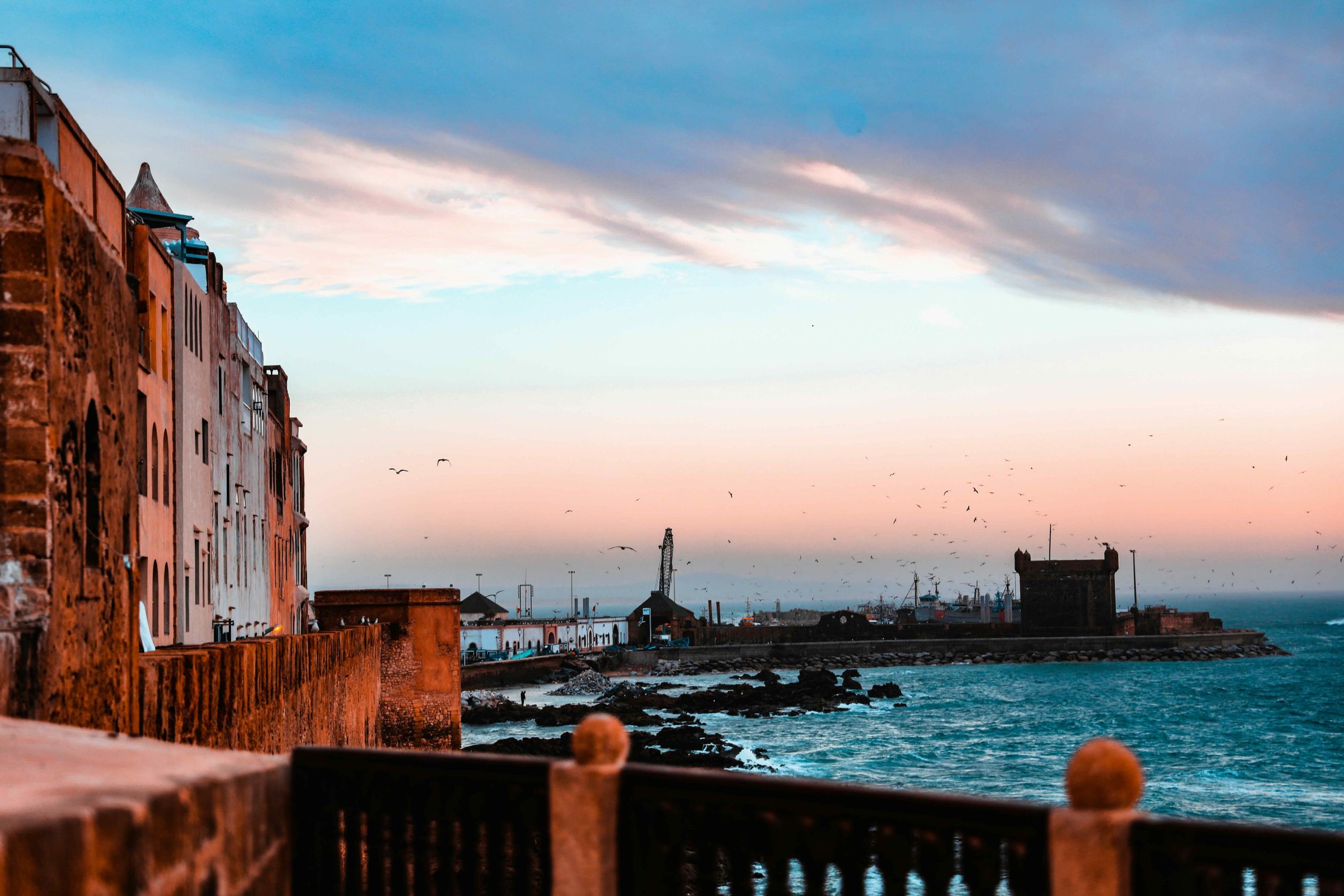
“We left the port of Essaouira on the Atlantic Coast of Morocco and chugged gently to Mogador Island, a kilometere or so offshore. On this rock there were a couple of thousand falcons. A lifetime of birding screamed at me: this can not be!
But it was. Birds of prey aren’t by nature colonial birds: what they eat tends to be distributed over a wide area and daily flights over food profit no one. Every sparrowhawk knows that and should a rival appear, this wood ain’t big enough for the both of us. That’s quite literally the truth: in modern lowland Britain it has to be a very big wood indeed to have enough prey to feed more than one pair of sparrowhawks and their young.
So what is this all about? They were Eleonora’s falcons, named for Eleonora of Arborea (on Sardinia) who in 1392 gave protection to all nests of hawks and falcons. This was no doubt for the love of falconry rather than wildlife but it was still good news for the birds. The falcons named for this hawk-loving ruler spend their winters in Madagascar and fly mostly to the Mediterrean for a hugely delayed breeding season: they raise their young in late summer and early autumn, almost six months later than you’d expect – and again, a birder thinks: that can not be.
I watched these neat, medium-sized falcons, built for speed and manoeuvrability, with great delight. I had seen many of them flying inland and feeding on dragonflies over the coastal wetlands grabbing them and eating them in the air. But what could they possibly catch in numbers big enough to sustain these hundreds of birds and their emerging chicks? The land around os barely rich enough to support small birds in the hundreds and thousands necessary to feed all those fierce and hungry falcons.
But the small birds come. Every autumn they come. They funnel along the coast and across islands on their annual migration south, avoiding the sea wherever possible. At this time their population is at its maximum, swollen with this year’s newly fledged youngsters. They must face the challenge of distance, exhaustion, cold, wind, weather, the need to find food at stopovers – and they must also run the gauntlet of Eleonora’s falcons as they cross the Med or coast-hug along the Atlantic. When a migrating flock passes, the falcons go to work, knowing that they can outfly any bird that turns up. They don’t just take enough to get them and their progeny through the day: they imprison their victims and then go back for more. They catch living birds but do not kill them. Instead they remove their flight feathers and trap the birds in crevices of rock, now the falcons have fresh food for several days for themselves and their young.
Eleanora’s falcons are interceptors and destroyers. They operate in numbers and take their annual bounty from the passing flocks. It’s a savage buisiness, but they didn’t evolve this way pf life ro please us humans, any more than the prey species of willow warbler sing their sweet songs to delight human hearts.”
Simon Barnes is a journalist and author of some 20 books, most of them about wildlife or birdwatching, a lifelong interest.